Credit: Samsung
Samsung Display unveiled new microdisplays based on RGB OLEDoS (OLED on Silicon) technology, designed for use in augmented reality (AR) and mixed reality (MR) devices. The presentation took place at Augmented World Expo 2026.
At the exhibition, the company demonstrated 1.3-inch RGB OLED panels with 40,000 nits of brightness. Seven panels were placed in a darkened room dubbed “Ursa Major,” shaped like the constellation of the same name. Two of them were used for direct comparison of the displays’ brightness and color rendering.
Samsung Display showcased a prototype of smart glasses with 0.62-inch high-brightness RGB OLED screens. Through these glasses, visitors viewed simultaneous translation, navigation, and weather information against the backdrop of the Long Beach coastline.
RGB OLEDos is a technology that embeds organic light-emitting diodes (OLEDs) on semiconductor wafers. The structure of these panels is simpler than that of competing solutions, simplifying the design of optics for smart glasses. The company highlighted the advantages of this technology for mass production and cost competitiveness.
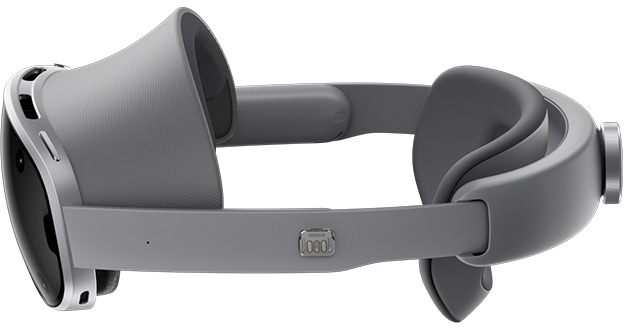
To demonstrate its capabilities in the MR segment, the company produced prototype headsets with RGB OLEDos. Visitors to the exhibition used these prototypes to watch videos of K-pop performances and play music rhythm games.
While Samsung Display has not confirmed any connection between the unveiled developments and future Samsung Electronics products, industry insiders report work on two smartglasses models. The device, codenamed Haean, is expected to feature microLED displays, while the other model, presumably called Glasses, will focus on cameras and voice control without a display.