
Credit: Pico
Chinese company BYTEDANCE, best known for creating TikTok, entered the virtual reality market by acquiring startup Pico in 2021. Pico is now taking its mixed reality (XR) developments even more seriously, creating software that allows users to use multiple apps in 3D digital workspaces. Many of its features are very similar to those of Apple’s Vision Pro, released two years ago.
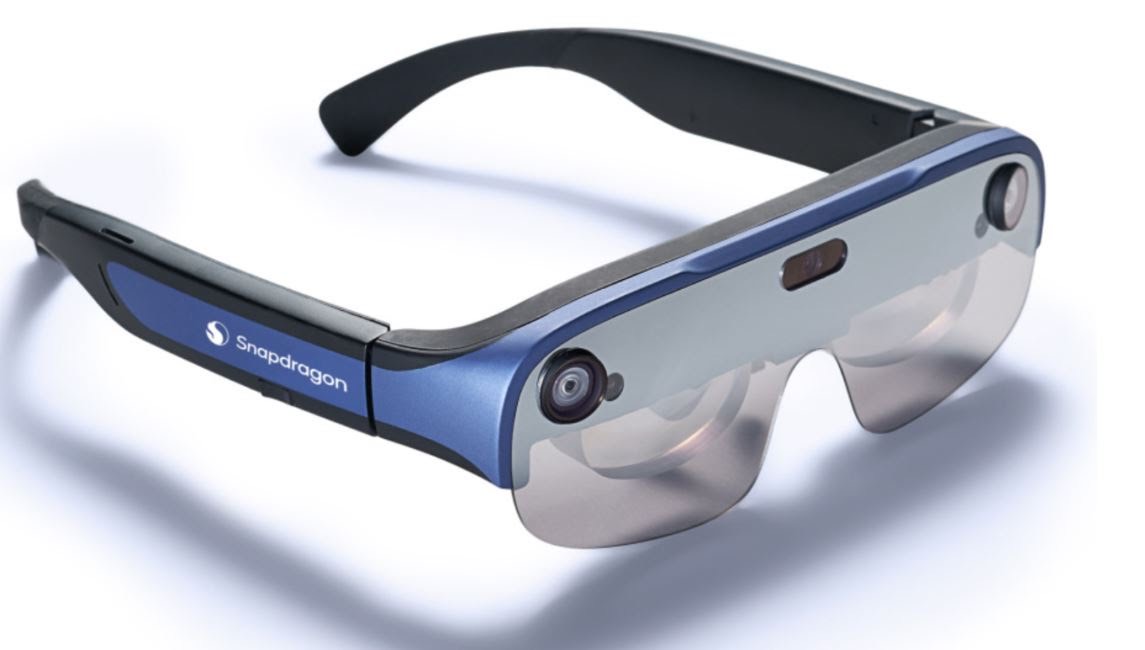
The company has revealed details about its augmented reality headset, codenamed Project Swan, which will be released later this year.
As previously reported, the upcoming headset will feature micro-OLED panels with a 4000 pixel per inch (PPI) density and a dual-chip architecture with a dedicated coprocessor to support computer vision and image processing tasks.
Pico noted that the headset’s main processor will offer twice the performance of the Snapdragon XR2 Gen 2 used in the current Pico 4 Ultra and Meta Quest 3 headsets. It’s possible this is Qualcomm’s Snapdragon XR2 Gen 3, although there’s no direct confirmation.
According to the company, the “next-generation” micro-OLED panels will deliver an average angular resolution of 40 pixels per degree (PPD) and a peak resolution of 45 PPD, which is higher than Apple’s Vision Pro and sufficient for displaying text on virtual monitors.
Meanwhile, the coprocessor—a specialized chip that enables computer vision and image processing—offers, according to Pico, “approximately 12 ms of latency.” This is the same figure as the R1 chip used in Apple’s Vision Pro headsets.
Pico OS 6 reportedly uses the proprietary Pico Spatial Engine, which allows for the simultaneous running of both 2D and 3D apps, using virtual or physical reality as a background. In contrast, Meta’s Horizon OS and Google’s Android XR only support running one 3D app at a time.
Pico also announced that it has opened applications for closed beta access to Pico OS 6 and Project Swan testing.