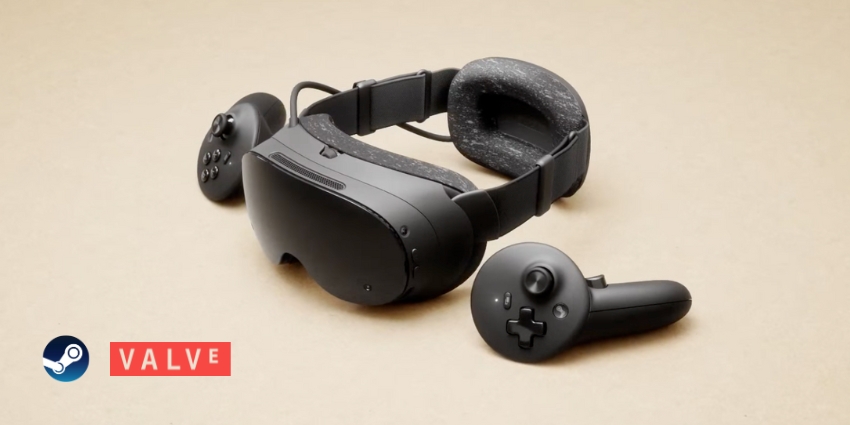
Credit: Valve
Valve’s announcement of the Steam Frame feels like a long-awaited boost for the PC VR ecosystem. Whether you’re an XR hardware vendor, a corporate buyer, or an innovation leader tracking the future of immersive hardware, this headset is more than just another spec bump. It marks a shift toward streaming-focused design, seamless access to extensive software ecosystems, and modular hardware that straddles the line between console, wearable, and workstation.
The key thing that makes the Steam Frame interesting from a B2B and enterprise XR perspective is its architecture. It’s a wireless terminal for the entire Steam library, both VR and regular games.
Valve positions the Steam Frame as the easiest way to access XR content or launch a regular game on a personal virtual “cinema screen.” This duality is important: it demonstrates that XR is becoming a mode of use, not a standalone platform.
The key element is the dual-radio architecture:
- one radio channel is exclusively for streaming video and audio from a PC via the included 6 GHz adapter,
- the second is for a regular Wi-Fi connection.
No bandwidth wars. No frame rate drops. Just stable, low latency comparable to local rendering. This is a huge advantage for enterprise XR. High-quality, low-latency streaming opens up opportunities for:
- Viewing large 3D models
- Engineering simulations
- Large-scale VR training
- Secure, on-site rendering
And all this without tying employees to powerful desktop PCs.